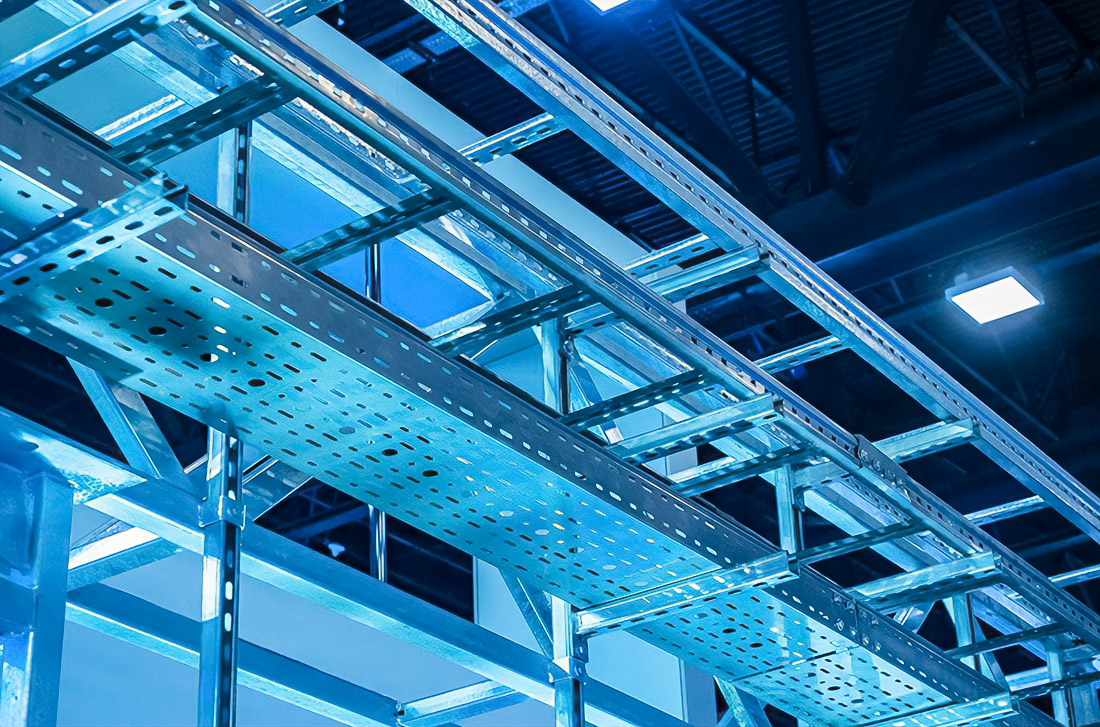
Cable Tray Design Challenges in Metro & Rail Projects Across the UAE
Modern buildings and transportation facilities rely on a complex electrical infrastructure in which power, low-current and communication cables form a single system. The safety, operational reliability and service life of engineering systems directly depend on how well the cables are laid. Cable tray UAE solutions have become a key element of structured cable management precisely because they allow these tasks to be solved systematically rather than piecemeal.
In industrial and commercial buildings, metro facilities, railway junctions, aviation and transport infrastructure, and cable systems operate under conditions of high load, high temperature, dust, moisture and limited space. Chaotic laying leads to overheating, insulation damage, maintenance difficulties, and increased risks of short circuits. The use of cable trays forms organised routes, reduces operational risks and simplifies cable condition monitoring.
Engineering Requirements for Cable Management Systems
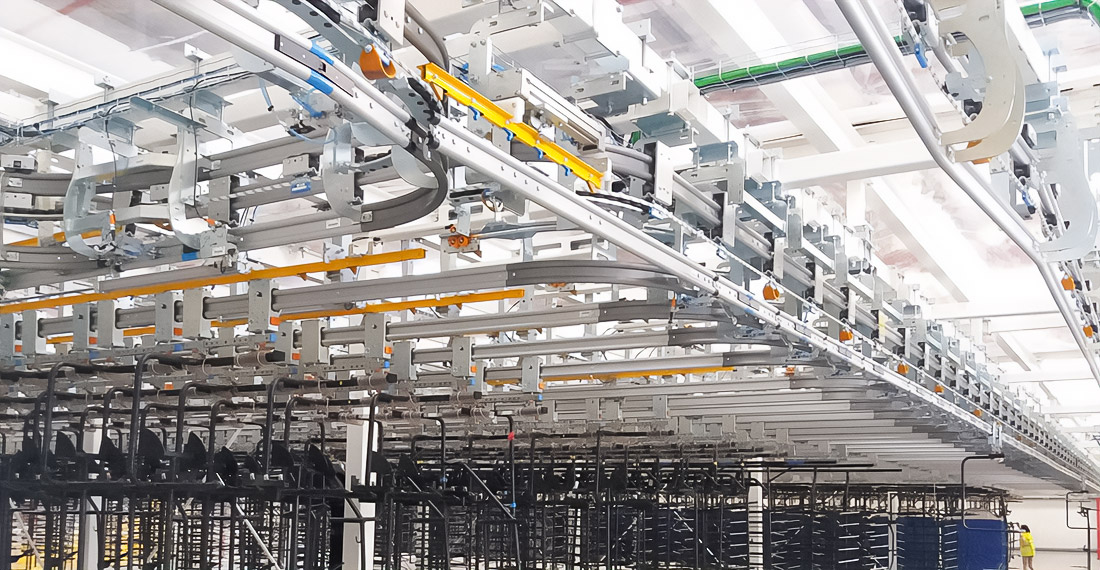
Cable trays must provide mechanical strength, resistance to deformation, and uniform load distribution. With a high cable density, the load-bearing capacity and the correct calculation of the supports are especially important. In practice, the installation step of the supporting structures averages 1.5–2 metres, but it is always adjusted depending on the weight of the cables and the type of route.
The issue of heat dissipation is no less critical. Overheating is one of the main causes of premature failure of cable systems. To prevent this, the restriction of the filling of the routes is applied: the optimal occupancy of the cable trays is 40-50%, which ensures adequate ventilation and reduces the risk of thermal degradation of the insulation. In high-temperature conditions typical for cable tray UAE applications, perforated and open structures that help dissipate heat are particularly effective. In low-current and data routes, the wire mesh type cable tray is often used to enhance airflow and simplify cable access.
Safety, Standards and Operational reliability
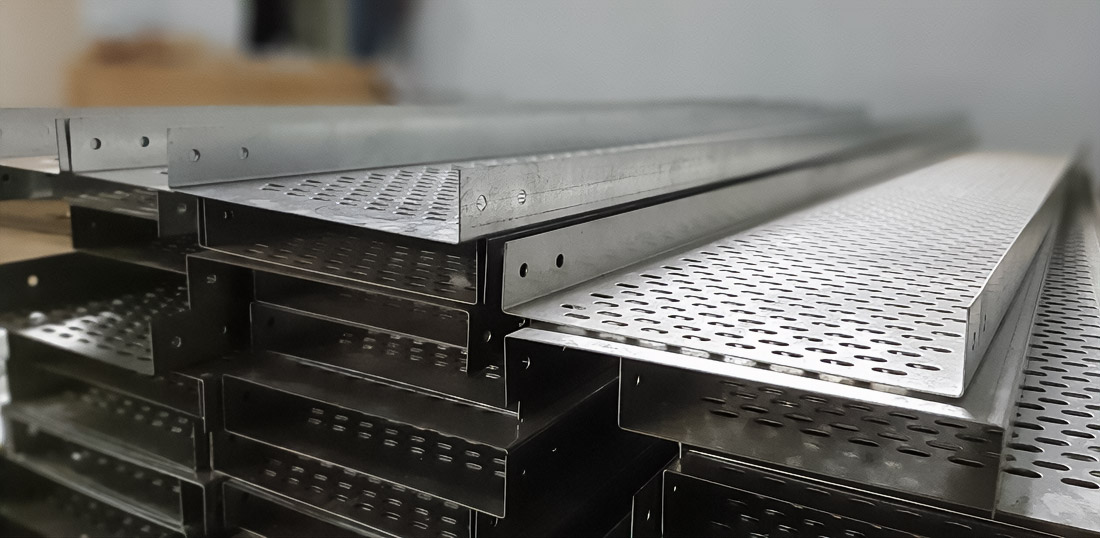
Cable management is directly related to fire safety. Improperly secured or damaged cables increase the likelihood of short circuits and sparking. Structured cable tray systems allow you to maintain standard distances, control bending radius and minimise mechanical damage.
For power cables, compliance with the bending radius is of fundamental importance: it should be 8-12 cable diameters, depending on the type and design. Violation of this requirement leads to internal damage to the cores and deterioration of electrical characteristics. Cable accessories — turns, transitions, gearboxes, connectors — ensure a smooth change in the direction of the route without critical stresses.
Grounding and electrical continuity of the system are also prerequisites. The connecting elements provide not only mechanical fixation but also form a continuous conductive circuit, which is critical for the protection of personnel and equipment.
Application in Transport and Commercial Infrastructure
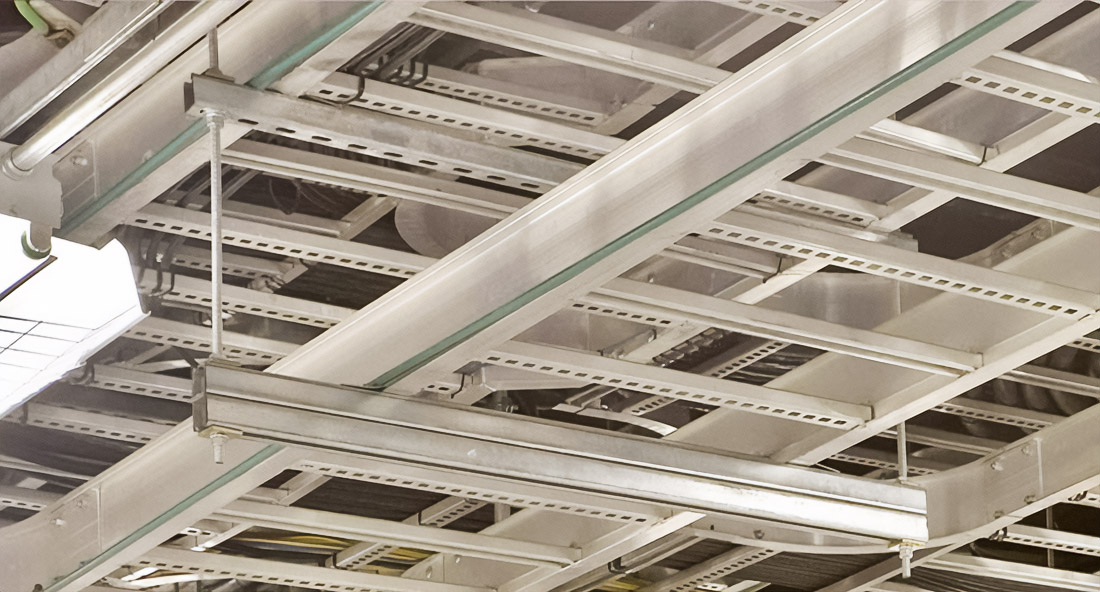
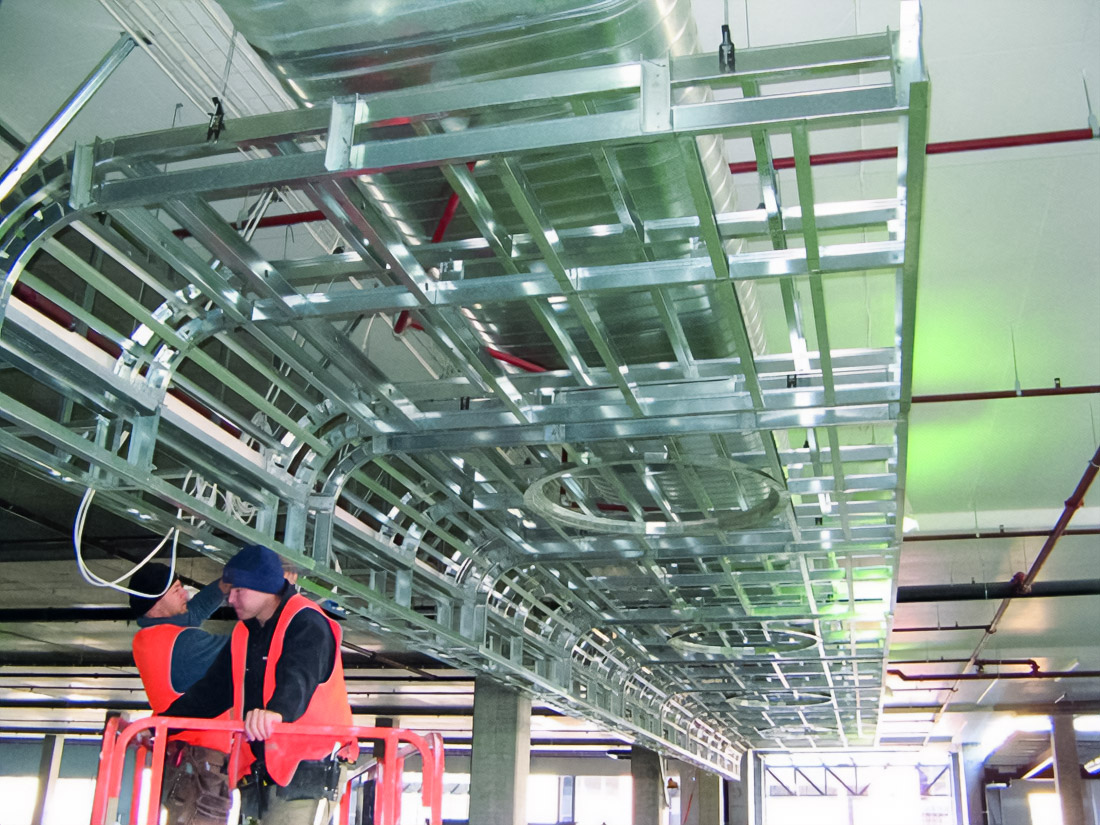
In transport projects such as subways, railway stations, and terminals, cable trays act as a “framework” for power supply, alarm, communications, and security systems. Compactness, high density of trails and ease of maintenance are especially important here. Perforated structures reduce the overall weight of the system, which is critical for overpasses and underground structures, and simplify access for inspections.
In commercial buildings and data centres, scalability and flexibility are coming to the fore. Cable systems rarely remain the same: equipment is being updated, new lines are being added, and the load is increasing. The modular structure of the trays allows for upgrades without dismantling the entire route, reducing downtime and operating costs.
Life Cycle Economics and Market Growth
Well-designed cable management systems reduce costs not only for installation but also for maintenance throughout the entire service life. The probability of accidents is reduced, diagnostics is simplified, and repair time is shortened. This is especially important for facilities with continuous operation.
The cable systems market is showing steady growth, which confirms their strategic role in the infrastructure. The market size of cable management systems in the Middle East is estimated at about 945 million US dollars, and the average annual growth rate is about 7%. Globally, the cable tray market is estimated at 4.5–4.8 billion dollars, with a forecast to grow to over 12 billion dollars by 2030. Transportation projects, development of data centers, automation and expansion of energy systems remain the drivers of this growth.
Cable trays have long ceased to be a secondary element of engineering systems. This is a fundamental part of the electrical infrastructure on which the safety, reliability and long-term efficiency of facilities depend. The correct choice of design, compliance with filling standards, load calculation, thermal control and the use of high-quality accessories form a system capable of operating for decades without critical failures.
As buildings become more complex and operational requirements increase, cable management becomes not a technical detail but a full-fledged engineering solution that affects the stability and functionality of the entire infrastructure.

Snowboarder, father of 3, music blogger, hand letterer and growthhacker. Working at the nexus of beauty and function to create strong, lasting and remarkable design. I’m a designer and this is my work.